Showing posts with label seasonal. Show all posts

Saturday, January 25, 2014

BERGAMOT SORBET

Bergamots - pale fleshed, pale skinned (though some are green) and petite like a blood orange - have the most extraordinary flavour. Their juice is full of perfume and fresh, fresh citrus, and smells like a cup of the best Earl Grey tea imaginable.

Halved bergamots

Eating this sorbet was a perfect antidote to a cripplingly heavy lunch (mini pizzette with smoked provola, then sausages in red wine with parmesan polenta and pink radicchio, and more cheese after that); just tangy enough that you can get a full dose of bergamot, but not so much that your eyes start to water.

Bergamo sorbet
350g caster sugar
4 unwaxed bergamots, zested and juiced

1. Gently heat the sugar with 600ml water in a pan until the sugar has dissolved. Bring to the boil and simmer for 3 minutes then remove from the heat and stir in the bergamot zest. Allow to infuse and cool completely.
2. Stir in the juice and strain into the bowl of an ice cream machine and churn the machine until almost frozen then transfer to the freezer to set. Alternatively pour the cooled syrup into a large, shallow, freezeproof tub and freeze. Fluff up the sorbet with a fork every hour, then after 4 hours, leave to freeze. Keep it covered in the freezer for up to 3 months. 

Next time I might drizzle it in dark honey to serve, or infuse the syrup with pieces of ginger.


James Ramsden: "spectac"
[Must admit, bergamots aren't the easiest things to get you paws on but you can buy them here at Natoora. Now is when their at their best.]

Monday, January 13, 2014

CAVOLO NERO & HAZELNUT PESTO


Cavolo nero and hazelnut pesto

200g cavolo nero, trimmed of thick stems, washed and chopped
3 tbsp toasted hazelnuts
3 anchovies in oil
1 fat garlic clove
good handful of watercress leaves
juice and zest of 1/2 lemon
25g parmesan, grated
100ml olive oil
salt and pepper

Whiz all but the olive oil in a food processor then, still whizzing, gradually pour in the olive oil until you have a thick pesto. Season generously.

Stir through pasta, scoop up with crisps, dollop onto soup.

Thursday, November 7, 2013

BROWN SUGAR PEAR CAKE

Brown sugar pear cake (for pudding)


for the pears
2 large ripe pears (such as comice) peeled
juice of a lemon
100g caster sugar
2 slices of fresh ginger
splash of brandy

for the cake
100g golden caster sugar
100g light brown sugar
1 tsp sea salt
2 tsp baking powder
1 tsp ground ginger
100g ground almonds
100g semolina
1 tsp vanilla extract
zest of a lemon
4 medium free range eggs, lightly beaten
200ml olive oil

1. Place the pears in a deep saucepan with 300ml water or just enough to cover. Add the lemon juice, sugar, ginger and brandy and bring to simmer. Simmer over a medium-low heat for 10-15 minutes until just beginning to soften and the poaching liquid has taken on some of the flavour. Remove the pears with a slotted spoon and allow to cool. Don't worry if they start to brown.
2. Vigorously simmer the juices for 20 minutes so they reduce into roughly 75ml of golden, caramel-like syrup. Pour almost all of the syrup in the bottom of a lightly greased 20cm springform cake tin and swirl to cover a bit. Slice the pears in half, remove the core and thinly slice. Layer onto the caramel base in a spiral shape, overlapping slightly and covering entirely.
3. Preheat the oven to 180C/fan160C/gas 4. In a large bowl, mix together the dry ingredients. Stir through the eggs and olive oil to make a wet batter. Pour the batter over the pears and slide the cake tin, on a baking sheet, into the oven. Bake for 50 minutes to 1 hour until golden and a skewer comes out clean.
4. Leave the cake to cool in the tin for 10 minutes, before turning it out onto a wire rack. While still warm, brush the remaining syrup onto the pears. Best served warm (not hot) with a drizzle of cream.

Wednesday, March 27, 2013

CELERIAC REMOULADE

This on a menu, with a few thin slices of proper jamon, makes me squeal with glee. If there were space, I'd make a vat-load to fill jars for every corner of the fridge, and dip in and out when I pleased.

Celeriac remoulade wins for its true rooty flavour; no ingredient is lost even though tossed through buckets of spicy mustard and soused in tart lemon juice. It's a frugal combination and is easy to make. It is bed-friend to my favourite things: slather it on good bread; spoon it into a jacket potato and eat with baked beans (yes); gobble fork-free with piggy bits.  


CELERIAC REMOULADE


Serves 4-6
1 x 500g celeriac, peeled
olive oil, to drizzle
3 tbsp creme fraiche
1 tbsp grainy mustard
3 tbsp dijon mustard
juice of a lemon
freshly chopped parsley leaves, to serve

Coarsely grate the celeriac into a large bowl and drizzle with olive oil.
In another bowl, mix the creme fraiche with the mustards then stir through the lemon juice. Taste then season with salt and pepper as you see fit. Mix through the celeriac and, just as you are about to serve, toss with the chopped parsley.
Serve a handful on salty jamon and drizzle with a little olive oil.

Wednesday, November 7, 2012

A VEGGIE SUPPER


RAINBOW CHARD AND MUSHROOMS 


SERVES 2

1 head of chard
1 tbsp olive oil
1 red onion, finely sliced
1 garlic clove, crushed
1 medium red chilli, finely chopped, plus extra to garnish
4 field mushrooms
100g good quality mozzarella
handful mint leaves

Separate the chard leaves from the stalks. Bring a pan of lightly salted water to the boil and drop in the chard leaves for 2 minutes until wilted. Drain, refresh under cold water and, after squeezing out excess water, set aside. 

Heat the olive oil in a frying pan or wok and add the onion. Fry on a low-medium heat for 5 minutes until just soft. Add the chard stalks and continue to fry for another 5 minutes. Then, add the garlic and chilli. Cook for 1 minute more, then season well with salt and pepper. 

Preheat the grill to high. Lay the mushrooms on a baking sheet, top with torn mozzarella, drizzle over a little olive oil and season generously. Place the sheet under the grill and cook for 5 minutes until the mozzarella is bubbling and golden and the mushrooms have softened. 

Meanwhile, reheat the chard stalks and onions and stir through the chard leaves. Tear the mint leaves and, reserving a few for a garnish, mix through the chard.

Remove the mushrooms from the grill and serve on top of the chard mixture with the remaining mint leaves and a little more chopped chilli, if you like.

Saturday, September 22, 2012

AUTUMN COLESLAW

I adore this dish. The colour kicks us straight into autumn - bright pink and vibrant. It keeps to all the promises of a perfectly constructed salad: sweet crunch from the roots, creaminess from the yoghurt, citrus to cut through, a light nuttiness and a well-balanced freshness from the herbs.


It works wonderfully well alongside meat, hot or cold - a classic pulled pork, leftover roast ham or crispy chicken wings - or seasonal fruits - pears, apples or plums.

I could eat this for every meal. Even breakfast.

BEETROOT, CELERIAC & CABBAGE COLESLAW

serves 8


ingredients

1/2 white cabbage
1/2 celeriac, peeled and grated
3 small beetroot, peeled and grated
finely grated zest and juice 1 large lemon
2 tbsps greek yoghurt
sesame seeds to garnish, optional
large handful mint, finely shredded
large handful coriander, finely chopped
olive oil to dress

Add the grated beetroot to a large bowl (not the one you are going to serve the coleslaw from). Finely shred the white cabbage, discarding the tough core and slicing up any large pieces, and add to the beetroot with the celeriac. Add the lemon zest and juice, and lightly toss - you want to avoid over tossing the beetroot at this stage as it will stain the other vegetables.

Keep covered in the fridge until you are ready to eat it. Just before serving, stir through the yoghurt so that it is evenly distributed. Move to a clean bowl, then dress with the sesame seeds, mint and coriander. Drizzle, generously, with olive oil.

* If you are not going to eat all of the coleslaw, leave aside some of the salad after adding the lemon juice. Any leftovers can keep for up to three days or can be cooked up as an autumn gratin. Butter an oven-proof dish and pour in the lemony root vegetable mix. Pour over cream, season, grate with parmesan and bake for 25 minutes in a hot oven (200°C/fan180°C/gas 6). Heaven.

Sunday, August 26, 2012

SUMMER SAUSAGES

I spent a very wet Saturday stomping around Broadway market, sheltering under green-striped tarpaulins, standing nose to nose with the marketeers. I scooped up two old cushions, a greedy burger form Lucky Chip, two corn on the cob and a couple of peculiarly shaped courgettes. Despite the sodden shoes and soggy mop, it was quite a perfect day. 

This sausage dish is a great cheerer on a wet day and needs very few ingredients to give a great supper. Get bonne saucisse, a bunch o' cherry tomatoes, strange courgettes and an onion. And that's pretty much it. I love it. 

SUMMER SAUSAGES


serves 4

1 tbsp olive oil
8 pork sausages
1 large echalion shallot, sliced
3 garlic cloves, crushed 
20 cherry tomatoes
2 courgettes (custard white are fun)
1 tbsp passata
50ml water
salt and pepper
handful sweet basil, torn


Heat up the olive oil in a large, deep frying pan over a medium heat. When hot, add the sausages and cook for 10 minutes with a lid on, turning occasionally to brown evenly.

Chop the sausages with a wooden spoon and add the onion and garlic. When the onion has softened, throw in the tomatoes. Cook for 5 minutes and add the courgettes. Season and stir.


Now add the passata and the water and simmer for 5 minutes. When the sauce has reduced, tear up the basil and stir through. Serve with a well-dressed salad and a hunk of bread for mopping. Dead cosy like.

Friday, June 22, 2012

ASPARAGUS, PEACH AND BASIL SALAD


A beautiful and uncomplicated
ASPARAGUS, PEACH AND BASIL SALAD
with cured ham
inspired by Clara


serves 4

ingredients

3 bunches fine asparagus (roughly 8 stems each), snapped at base
2 ripe yellow flesh peaches, sliced
generous handful basil leaves, torn
generous pinch salt
100ml olive oil
200g cured ham (Parma/Serrano)

Bring a large pan of water to the boil. Add the snapped asparagus stems to the water and simmer for 2-3 minutes until they are bright green and still have a bit of crunch. Drain and refresh under cold water. 

Place the asparagus in a large bowl and scatter the peach slices and torn basil leaves. Drizzle with olive oil and season with salt. Toss and serve with the ham. 

Tuesday, June 5, 2012

ROAST PULLET

HEAR YE HEAR YE. 

Ginger Pig have just plumped up their poultry counter with a collection of gorgeous looking birds. 

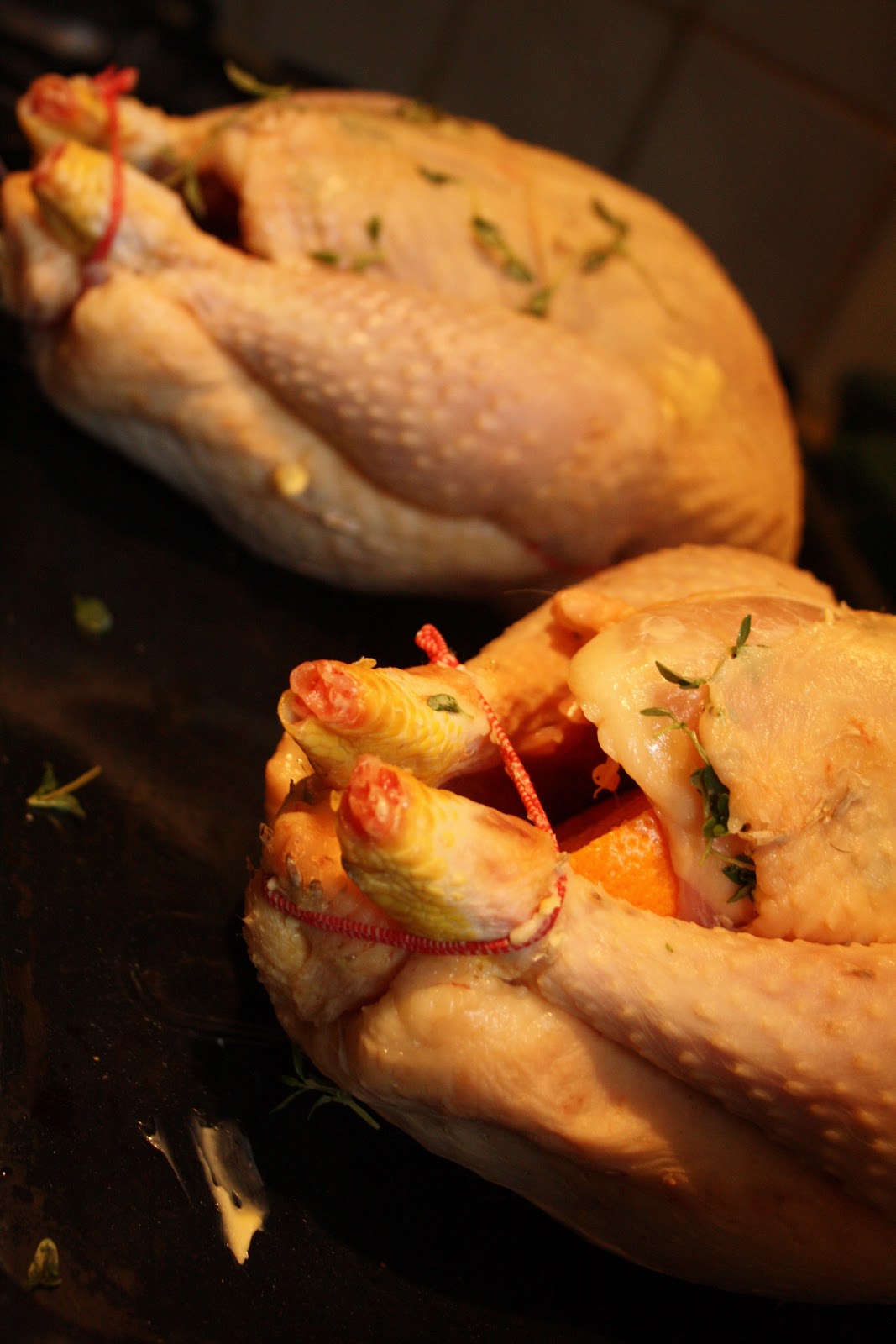
I nabbed a couple of pullets (100 day old chooks) for an 8 person dinner party and they were deliciously tender. Roast these young'ns at a lower heat and for a little bit longer than you would the older gals. They will be pulled from the oven juicy and succulent and, once rested, will produce a fine feast for fine friends. 

ROASTED PULLET 


with Orange, Radish and Chicory Salad

serves 8-10

ingredients

2 x 0.9kg pullets
1 orange, halved
1 onion, peeled and halved
100g butter
1 large garlic clove
1 generous bunch thyme
1/4 tsp flaked sea salt

for the salad dressing
1 tbsp cider vinegar
1/2 tsp sugar
1/2 tsp Dijon mustard
3 tbsp olive oil
squeeze orange
salt and pepper

for the salad
9 heads pink chicory, quartered
16 breakfast radishes, stalked and halved
handful of dates, chopped (optional)
2 juicy oranges, peeled and sliced


Preheat the oven to 160C. 

Place the chickens on a large roasting tray. Squeeze the orange halves into the tray and put a half into the cavity of each bird. Place the onion with the juice in the tray.

Mix the butter with the garlic and thyme, and season well. Using your fingers, loosen the skin from the breast of each chicken. Spread this mixture between the flesh and skin of the breast, pushing right to the back of the bird.

When the oven has reached the correct temperature, slide in the tray with the chickens. Let these cook slowly for 2 and a quarter hours or until the juice runs clear. Baste them with the tray juice half way through cooking. The skin will turn nicely golden and the meat will be tender. Pour the juice from the tray into saucepan with the onion. Loosely cover the birds with foil and leave to rest for 30 minutes before serving. 

Heat up the saucepan with the meat juices and add a glug of white wine. Simmer down, spooning off some of the fat. 

Meanwhile, whisk the dressing together in the bottom of a large bowl. Assemble the salad, making layers of the chicory, the radishes and the dates (if using). Toss the salad just before serving and layer with the sliced oranges. 

Serve the chicken warm with a light drizzle of gravy and a large helping of the orange salad.

Thursday, May 17, 2012

BROAD BEAN BRUSCHETTA

BROAD BEAN BRUSCHETTA

Spring on toast


serves 1-2

ingredients

250g broad beans, fresh best but frozen good too
1 garlic clove, roughly chopped
juice of 1/2 lemon
handful mint leaves, plus more to serve
3 tbsp olive oil, plus more to serve
2 tsp sugar, plus more to serve
1 tsp salt, plus more to serve

2 large slices of good bread


Bring a pan of water to the boil and add the broad beans. Bring to the boil again and simmer for 4 or so minutes. Drain and refresh under cool water and, if you have time, shell some or most of the beans. They are much easier to shell when cooked.

Add the beans to a small food processor and add the rest of the ingredients. Pulse about 20 times until you have a rough paste. If some beans have been missed out and are whole, leave them. They look lovely mixed through.

Taste the mixture. Add more salt to season, sugar to sweeten or lemon juice to sharpen up.

Toast the bread and spread over the broad beans. Scatter with mint leaves, a scrunch of black pepper, a pinch of sea salt flakes, and a generous drizzle of olive oil.

Serve for a light lunch with pea soup, chop up and serve as a canape or have for an unusual breakfast like I just have.

Monday, April 23, 2012

WILD GARLIC AND RICOTTA RAVIOLI

We made these fresh, filled 'lunette' for Rosie and Jim's on Sunday and they went down a treat.

The wild garlic filling makes a vivid, pea green centre for the ravioli, splashing colour onto the plate when you cut through, like the perfect poached egg. 

Substitute the filling with fresh garlic and peppery rocket or artichoke hearts and fennel seed.
Serve as a light starter for a springtime lunch.

WILD GARLIC AND RICOTTA RAVIOLI


serves 4 and 20

PASTA
FOR 4                                                                                 FOR 20

400g 00 flour                                                                      1kg 00 flour
pinch salt                                                                            heavy pinch salt
4 free range eggs                                                                10 free range eggs

(roughly one egg per 100g flour)

FILLING
FOR 4                                                                                 FOR 20

1 bunch wild garlic, stems removed, flowers set aside      3 bunches wild garlic
200g ricotta                                                                        600g ricotta
50g Parmesan, grated                                                         200g Parmesan, grated
pinch nutmeg                                                                     1 tsp nutmeg
salt and pepper to taste

BUTTER
FOR 4                                                                                 FOR 20
200g butter                                                                         500g butter
1/2 bunch sage, finely chopped, stems removed               1 1/2 bunch sage
1 garlic clove                     


Pour the flour and salt into a large mixing bowl and make a well in the centre. Add the eggs to the well and beat evenly with a fork, gently incorporating the flour. When the mixture starts to form a more solid shape, use your hands, mixing in the flour until the dough loses most of its stick. 

Flour a table and take the dough from the bowl. Knead the dough for about 4 minutes until smooth, elastic, and silky. Wrap in clingfilm and place in the fridge to rest for up to 2 hours. 

Bring a pan of water to the boil and throw in the wild garlic. Blanch for 1 minute, drain, and refresh under cold water. When cooled, squeeze the garlic to remove excess water. 

Place the garlic with the ricotta into a food processor and blitz until smooth. Add the Parmesan, nutmeg, and a generous helping of salt and pepper. Cover, and place in the fridge to firm up.

Lay a tray with floured baking parchment ready for the ravioli.

Remove the pasta dough from the fridge and cut into bits roughly the size of the palm of your hand. If using a pasta machine (recommended) set to 1 and feed the dough through. Fold three times and feed through again. 

Set the machine to two and repeat. 

Now set the machine to 5 and feed through once. If making by hand, roll to roughly 2 mm thick. This will be thin enough to give you a light but firm enough ravioli.

Cut the dough with a 3 inch round cutter, making two leaves for each raviolo. 

Take the filling from the fridge. Fill the centre of one leaf of pasta with a tsp of the wild garlic. Place another leaf on top and press around the outside with your fingers so the dough sticks together. Making sure each side of the raviolo has been lightly floured, place on the baking sheet. Repeat with the rest of the pasta and filling. 

Once made, the ravioli can be covered and put back the fridge until ready to use.

Meanwhile, melt the butter in a pan, adding the garlic clove. Skim off any white froth and curd from the top, remove the garlic and add the chopped sage and salt.

When ready to serve, heat up the butter, and bring a large pan or two of salted water to the boil. Gently drop in the ravioli. When they float to the top, scoop out with a slotted spoon and place into bowls. 

Serve with the sage butter, the wild garlic flowers and a pinch of sea salt flakes.

- Too much pasta? Roll it up into a ball and freeze for another lunch -

Thursday, March 15, 2012

ROASTED SWEDE SALAD

My mother, born and brought up in Scotland, land of all things neep, said she won't touch swede for love nor money. Had too much, she said. Can't stand the stuff. Can't bear the smell. And even when I pulled out a perfect turnip she sniffed at it, told me to throw it to the hens. I know many more who would say the same.

This recipe is great for those who don't like, or think they don't like swede. Roasting it with honey, garlic and thyme kindly masks its sheepy, back-of-the-throat twang (a grower for sure) and softens the solid root to chewy flesh. Combine it with smoked bacon and crumbled feta and you have the mix of salt and sweet. It's an easy way in. Mum ate it, and went back for more.


WARM ROASTED SWEDE, BACON AND FETA SALAD


1 large swede serves 2

ingredients

1 large swede, scrubbed, removed of its top, cut into chunks or wedges
2 tbsps olive oil
3 cloves garlic, unpeeled
4 roasted cherry tomatoes
2 sprigs thyme
generous season of salt and pepper
4 rashers smoked streaky bacon
tsp balsamic vinegar
100g feta
toasted pumpkin seeds, optional
few leaves mint, to garnish

Preheat the oven to 200C.

Put the swede in a roasting tin with the olive oil, garlic, roasted herry tomatoes and thyme. Season well. Place in the oven for 45 minutes. Add the bacon and put back in until crispy. The swede should be chewy with crisp skin. Remove from the oven.

Pour the balsamic into the bottom of a large bowl and pour in the warm olive oil from the roasting tin. Whisk to emulsify and add the roasted swede and bacon. Crumble over the feta and pumpkin seeds, if using, and toss through. Garnish with mint and serve, warm, spreading the roasted garlic onto thick slices of bread. Swede, swede heaven.

Monday, February 20, 2012

FRANKFURTERS AND RADICCHIO

Precooked, reconstituted, over-processed pork. What's not to love? There's something about the oh-so-slippery frankfurter - the pop as you bite, the flop as you pick up, the salt as you chew, and the eight more after that - that rocks my boat. Once in a while (and, frankly, not often enough) they hit it. Bop.

Hell, why not wrap one up in a pancake for breakfast tomorrow?

FRANKFURTERS with CREAMY RADICCHIO and NEW POTATO HASH
eaten in utter joy with co-frank-lover Clara


serves 2

4 small new potatoes
knob butter
1 clove garlic, chopped and crushed
1 head of radicchio, shredded
100ml double cream
salt and pepper
6 frankfurters

Bring a small pan of water to the boil. When boiling, drop in the potatoes and turn to a simmer. Cook for 15 minutes until softer than you'd usually cook them. Take off the heat and leave in the water.

Meanwhile, fry the butter over a medium heat in a saucepan and, simultaneously, add the garlic and shredded radicchio. Stir through and cook until the radicchio is slightly wilted. Now push the radicchio aside and add the frankfurters. Cook until the skin is browned and they are hot through.

Remove the sausages to a piece of kitchen towel. Drain the potatoes and add to the radicchio. Crush them slightly with the back of the wooden spoon.

Add the cream to the radicchio mix and bring to a simmer for 1 minute. Season and serve alongside the frankfurters. Fabulous with Annie Bell's mustardy Savoy coleslaw (as seen in photo).

Pure unadulterated - apart from the meat - heaven.

Monday, September 12, 2011

BEETROOT GNOCCHI

This dish reminds me of sluggish pomeriggi in the trattoria of Bologna. Fresh pasta, floury and soft, with a painless, no-frills sauce. And probably a fierce glass of red to wash it down.

Here, the fresh garlic, crisp sage and toasted hazelnuts bring strength and bite to the earthy, soft gnocchini. Gnocchi are simple enough to knock up (there's a bit to do a the beginning but this can all be done in advance) and they go a long way for lunch - you'll be full after a small plate so there will be plenty left over for surprise diners.

BEETROOT GNOCCHI
with, TOASTED HAZELNUTS, FRESH GARLIC & SAGE BUTTER

SERVES 2

ingredients

100g beetroot, peeled and chopped
250g King Edward potatoes, peeled chopped
75g plain flour
1 small/medium free range egg, beaten
salt
100g lightly salted butter
fresh garlic, sliced in rounds
handful sage leaves
approx. 10 hazelnuts, crushed
Parmesan

Bring two pans of salted water to the boil. Put the potatoes in one and the beetroot in the other. Cook the beetroot and the potatoes until soft enough to slip a knife through.

Put the beetroot into a food processor and whizz until pureed. Push the puree through a sieve once or twice to make it really smooth.

Mash the potatoes. They should be light and fluffy with little moisture. Keep them on the heat for a bit if the is any excess water.

Measure out the flour into a deep bowl, or on a floured surface. Make a well in the flour and add the egg, beetroot and potato. Season with salt. Mix through with your fingers, so that the colour of the beetroot spreads evenly. The mixture should turn into a soft dough. If too wet, add more flour.

Cut the dough into equal sized squares and roll into long sausages. This is where you can experiment with size and shape, but to go for the traditional diamond, cut the dough diagonally, every 2-3 cm. Lightly dust with flour.

Bring a pan of salted water to the boil.

Gently toast the hazelnuts in a small pan and set aside.

Meanwhile, melt the butter and add the sliced garlic. You want this to cook very gently before adding the sage. Once the garlic has softened slightly, add the sage to infuse into the butter and crisp up.

Add the gnocchi to the pan. As soon as they float to the top, they'll be ready!

Serve up in a pasta bowl and drizzle with the sage garlic butter. Grate with a generous helping of Parmesan and sprinkle over the hazelnuts.

Talk to no one, look at no one, just eat.

Tuesday, August 23, 2011

ELDERBERRY ICE CREAM

This vivid magenta ice cream is wonderfully easy to make and, for the most part, is free. Go and pick the elderberries now - they look like deep purple versions of mistletoe; small berries in a bunch, hanging from an eight-stemmed stalk. You'll find them in trees amongst early sloes and damsons and they'll be around for the next month. Their taste is musky and sharp and much less versatile than the blackberry - we don't use them in cooking very much - but get them swimming in sugar and they become berrily potent and sweet.

ELDERBERRY ICE CREAM


ingredients

600ml double cream
100g caster sugar
4 egg yolks, room temperature, whisked
...
200g elderberries, de-stalked and washed
150g caster sugar

Heat the cream and sugar in a large saucepan and whisk until the sugar has dissolved. Bring to the boil and gently and slowly whisk in the egg yolks until thickened to a custard and evenly mixed. Set aside.

In another pan, gently heat the elderberries with the sugar, until the sugar has dissolved and the elderberries are just bursting. You do not want to overcook the berries but make them plump and juicy. Sieve the berries into another bowl, leaving pips and bits of rogue foliage behind. When both the custard and compote are cooled mix them together in a shallow metal bowl. Cover with cling film or tin foil and place in the fridge for 30 minutes to chill and set.

After 30 minutes give the custard a whisk and, unless you have a trendy ice cream machine, transfer to the freezer. Every two hours, whisk up the ice cream so that any ice crystals are mixed in. Do this two or three times before leaving the ice cream to set and freeze before serving. Mine took just over a night and a day to freeze but it depends on the temperature and the fullness of your freezer. It is best eaten within the week but can stay frozen, well covered, for longer.

Scrumptious with crushed Amaretti biscuits and a few fresh mint leaves.

Monday, August 15, 2011

SALT THE AUBERGINE

A late post, mid-August, back in London. Books for Cooks has shut up shop for the month so freedom has swiftly drifted in.

Last week was spent in southern France where evenings were fed with hazy cooking, whirling up fresh finds from the heaving markets of Agde, Grau D'Agde, and Clermont L'Herault. Crisp bread, fresh mackerel, calamari, best tomato salads, and cheese, oh cheese. Pale, chilled rose was decanted into a plastic tub from a nozzle in the wall, and drunk with devotion and constancy. (Smug).

We had one nasty bouillabaisse - an ancient, bitty, muddy stock - which came as a stiff reminder of why using vibrant, in-season ingredients can transform a dish from dismal to delightful. Picking out the good'ns makes cooking an effortless success.

Back in the cittaaay with time on my hands and August ingredients to play with its the aubergine that I've got it in for. Melanzane parmigiana, marinated aubergine, deep-fried eggplant. That unmistakeable rubber skin, a deep purple, an earthy musk, a friend to any late summer salad...

LAMB CUTLETS WITH BAKED AUBERGINE, TOMATO AND THYME


SERVES 2

ingredients:
4-6 British lamb cutlets
1 large aubergine, sliced length ways
2 tbsps salt
2 tbsps extra virgin olive oil
1 tbsp salted butter
2 shallots, finely sliced
1 large clove garlic, crushed
1 beef tomato, roughly chopped
50g creme fraiche
handful fresh thyme, torn
150g Parmesan cheese, grated
black pepper


Preheat the oven to 180 C/ 380 F/ Gas 3.

Prepare the cutlets, covering then in olive oil, and a good helping of salt and pepper. Cover with clingfilm and set aside.

Place the aubergine slices in a colander and scatter with salt. Leave to sit for 30 mins so that the excess moisture is drawn out. Dab the aubergine dry with kitchen towel, wiping it free of any white droplets that appear. Heat up 2 tbsps olive oil on a medium to high heat and add the aubergine slices. Fry on each side until golden brown. Remove from the pan and drain on another piece of kitchen towel.

Melt the butter in the same pan and add the shallots. Cook until soft. Add the garlic and tomatoes and fry for 3 minutes.

Place the aubergine and the tomato mix into a small oven dish.

Pour the creme fraiche into a clean saucepan and bring to a simmer. Add half the Parmesan,the thyme and a seasoning of black pepper. Stir until the cheese has melted. Drizzle the sauce over the aubergine and tomato with the rest of the Parmesan. Place the dish in the oven and bake for approx. 20 mins or until golden on top. Take the aubergines from the oven and leave to cool slightly.

Put a large frying pan on a high heat. Drop a splash of oil in the pan; if it hisses, it is hot enough for the cutlets. Cook for 3 mins on each side until the meat has browned and the fat is crisp.

Spoon the aubergines into a shallow bowl or pasta dish. Place the lamb on top with a few springs of fresh thyme.

The aubergines create the most delicious sauce so, when you've finished, either mop it up with a hunk of good bread or sip it straight from the bowl! Very good with orzo for some starchy love.

Monday, July 18, 2011

TOP PRIZE FOR GARDENING GOES TO...

...my sister and her loved-up carrots.
That's one way to get the nippers eating their greens and oranges!


How does your garden grow?

Tuesday, July 12, 2011

DEEP FRIED ARTICHOKE WITH ANCHOVY AIOLI

Artichokes may be the most striking features of summer - a powerful dome of a vegetable, a spiky crown with layer after layer of thick green armour - but most of us are too readily turned away by the thought that they are a hassle to cook.


The trimming, the scooping and de-choking; there's always one hairy fibre lurking in amongst those protective leaves. The boiling for a good half-an-hour. The pulling it apart. And then when you get to eating the rascal there's not even much flesh.

Ah - I see I've turned you off artichokes again.

But wait! There can be such joy in slovenly preparing a globe artichoke, much like scratching away for the meat in a crab claw or getting the goods from a pumpkin. Once you've done it, however much you've f'd and blinded, you know the result will be delicious.

Eating it, sucking at the green spades, reaches the meaning of less-is-more. The juicy muscle you pull from the stem with the back of your front teeth is like sipping the nectar from honeysuckle. A sweet surprise, not much of it, but you instantly pick up another. And that's when you find yourself thanking goodness artichokes have so many leaves.

DEEP FRIED ARTICHOKE WITH ANCHOVY AIOLI


SERVES 1-2

ingredients
1 globe artichoke (leaves tight to body indicate freshness)
1/2 lemon
100g/ dusting of plain flour
sunflower oil

for the aioli
4 small garlic cloves, crushed
juice of 1/4 lemon
pinch salt
2 free range egg yolks
approx. 350ml extra virgin olive oil

3 small anchovy fillets, roughly broken with fingers or fork

Slowly bring a deep pan of water to the boil.

Start trimming the outer leaves of the artichoke with scissors, cutting it at its roundest part. Do this 3/4 of the way up the artichoke, discarding the leaf tops.

With a sharp knife, cut the top from the artichoke. Pull away all the purple leaves inside until you reach fine, white hairs. Scoop the hairs out with a teaspoon. Stop when you reach flesh.

Trim the stem, leaving about 5 cm, and pull off the outer fibres. They should come away easily. If you are preparing more than one artichoke, have a bowl of water with a slice of lemon ready so you can keep the globe/s fresh. They will begin to brown otherwise.

Place 1/2 a lemon in the pan of boiling water with a touch of salt and lower in the whole artichoke. Boil for approx. 30 minutes or until it appears soft. Remove out of the water onto kitchen towel to lose excess moisture.

Meanwhile, prepare the aioli. In a small bowl add the crushed garlic, salt, lemon and egg yolks. Whisk gently, slowly adding the olive oil. Keep whisking until it thickens and and when ir resembles a good consistency for you, you can stop with the olive oil. I like my aioli quite loose - globulous mayo gives me the shivers. Taste it and see if it needs more salt, lemon juice, or garlic. This recipe is punchy.

Spoon the broken anchovy on top of the aioli. You can scoop it up with the artichoke leaves. (The best bit).

Pull apart the artichoke. This is easiest if you half or quarter it with a knife. Pull away the leaves and cut chunks from the heart (the most fleshy part of the globe). Dust the artichoke with flour - just a little it so it will crunch up slightly when you fry it.

Heat up a shallow frying pan with enough sunflower oil so that fills 1-2cm from the bottom of the pan. Set on a medium heat and WATCH! Oil can heat up very very quickly. As soon as you see a ripple in the oil or a few bubble forming on the bottom of the pan it will be extremely hot and ready to go. Gently lower in the dusted artichoke. It will bubble. Fry for approx. 2 minutes on each side or until golden brown. When ready, lift with a slotted spoon onto kitchen towel and drain off the excess oil.

Arrange the deep fried artichoke pieces on a plate around the bowl of aioli. Dip. Dip dip dip.

Note: There will be bits you put in your mouth which won't chew up. Spit'em out and move onto the next bit.

I can promise you, this recipe makes the process very worthwhile. It's also amazing with ready prepared artichoke hearts, for a less-hassle recipe.

There's leftover aioli here, so I think I'll do the same for supper tomorrow...

Tuesday, June 21, 2011

PIGS IN PINNIES AT THE SECRET LARDER

Can't give too much away to you oinkers, but seeing as last night's take over of the Ramsden Secret Larder was a blast, we'll bare this wee feasty nugget.

Slipped in between a creamy crab bisque and a groaning plate of lamb and samphire, Pigs in Pinnies present:

BROAD BEAN and SORREL SALAD
w/ RADISHES and CRISPED PANCETTA


Serves 4-6

1 large bunch of sorrel (about 6 leaves) washed, drained, chopped
8 large beetroot leaves, stalk-free, washed, drained, chopped
200g broad beans, double-podded:
(a bore but worth it to avoid memories of chewy grey school beans)
5 pink, round radishes, thinly sliced
100g pancetta, very thinly sliced, cut to 1x1in

dressing
1/4 tsp hot English mustard
1/4 tsp Dijon mustard
good pinch sugar
40ml white wine vinegar
100ml extra virgin olive oil
3 tarragon leaves, finely chopped
juice of 1/4 lemon or to taste(optional)

Bring a pan of water to the boil and cook the beans until heated through. Drain and remove the shell. (It'll be easier to take the beans from their shell when they have been cooked). Place back in the warm pan and set aside.

Mix the prepared beetroot leaves with the sorrel and a little salt and olive oil, then lay in equal bunches on the plate. In a medium-size bowl combine the radishes and shelled broad beans.

Put a lightly oiled frying pan on a medium heat. When the oil is hot, add the sliced pancetta. This should hiss as it hits the pan, the fat melting slightly so the meat won't stick. Cook until crispy.

Meanwhile, measure out the mustard, sugar and vinegar straight into a jar and stir well so the sugar dissolves. Add the olive oil, tarragon, and lemon, if using. The tarragon will leave a very faint hint - you don't want it to overpower the other punchy flavours on the plate. Whisk the dressing until blended. Season to taste. You want a smooth, sweet dressing with a sharp kick to complement the velvety broad beans and lemony sorrel.

Pour the dressing into the bean bowl, and gently toss through.

Lay the beans and radishes on top of the leaves. Scatter over the salty, crisp pancetta and serve.

An early summer salad with veggies a plenty,
Worthy of quadrupling for a supper o' 20.

Pigs in Pinnies'll be back soon,
With - we hope - another corker
to make you all swoon!

Monday, June 6, 2011

COURGETTE LINGUINE WITH CHILLI SQUID

SERVES 2

ingredients

200g linguine
75ml olive oil
2 shallots
1 clove garlic
2 heaped tsp chilli flakes
1 large courgette, julienned or cut into long thin strands
100g squid, thinly sliced into rings
6 leaves sage
salt and pepper
2 lemon wedges


Put a large saucepan of salted water on a high heat and bring to the boil. Meanwhile, heat the olive oil in a frying pan. When hot, add the shallots and soften. Follow with the garlic, chilli and courgette and stir through. Cook the courgettes for 5 minutes until light brown and soft. Season and set aside in a bowl. Keep the pan on the heat and add more olive oil and one teaspoon of chilli.

Put the pasta in the pan of boiling water and turn down the heat to a simmer. Follow the packet instructions for cooking time.

When the oil in the pan is hot and sizzling and the squid. The oil should fizz as you throw in the squid. Add the sage and the rest of the chilli. Turn down the heat slightly and brown the squid for approximately 1-2 minutes. It should be tender, not chewy, so you want to avoid over cooking it. The sage should be crisp.


Drain the pasta when al dente. Evenly fold in the courgette to the linguine.

Serve on warm plates, placing the squid and sage on top of the pasta. Squeeze over the lemon.

There you have it. A beautiful, hassle-free, summer lunch. Lovely with a cold glass o' white.