Showing posts with label stew. Show all posts

Wednesday, May 9, 2012

OX CHEEK RAGU


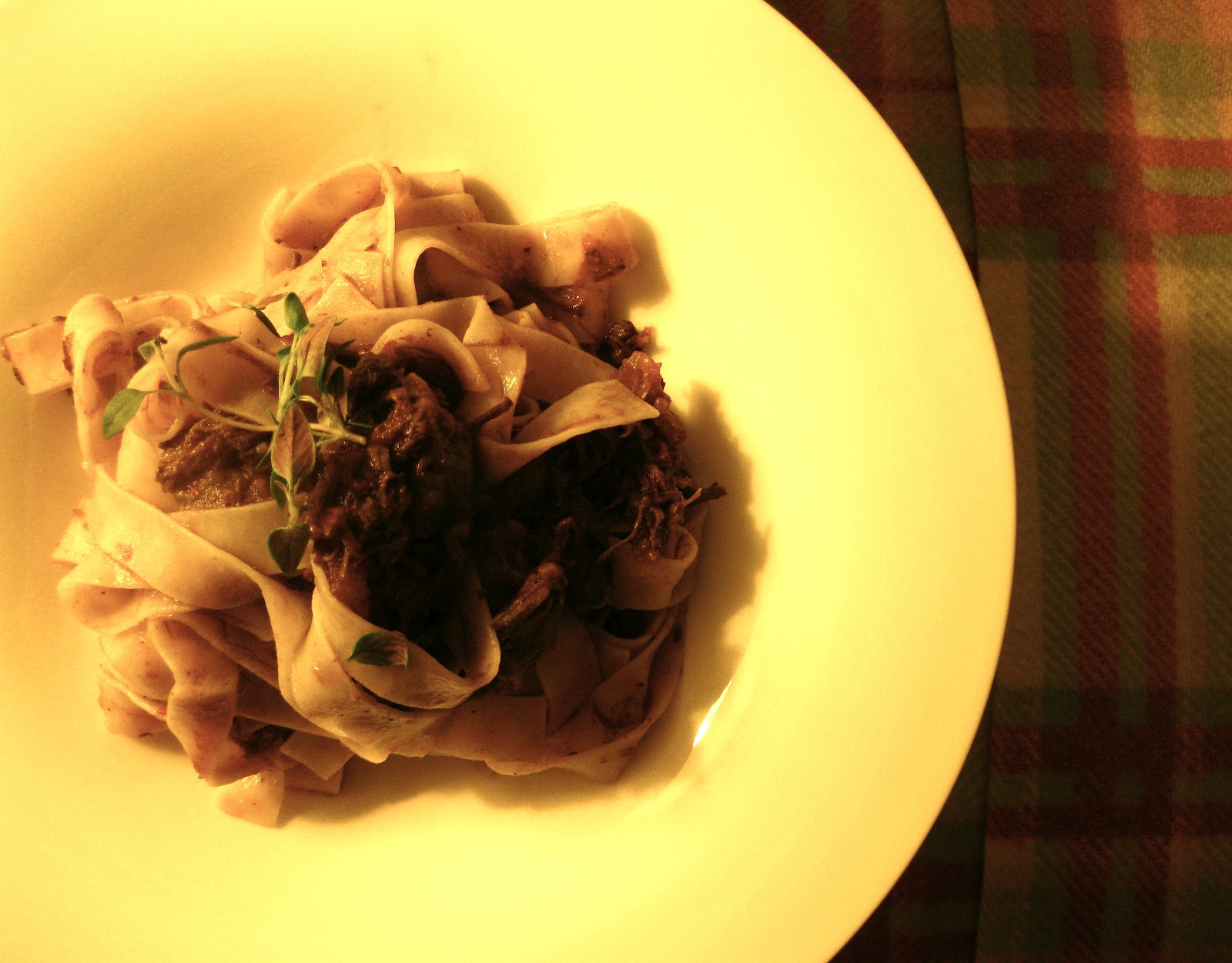
Melt. Slurp. Sigh... This is trattoria food at its most drool-worthy. The ox cheek turns from tough to tender over 6 hours and reduces down into a sauce so succulent you'll want to write a novel about it. 

This recipe - a new favourite - is ideal for feeding lots of people on the cheap - 500g of cheek cost me a fiver and was enough for 4 friends with giant appetites. It takes a while to cook - slow and low - but the only physical strain is putting it in the oven, taking it out and sharing it around. 

OX CHEEK RAGU WITH PAPPARADELLE
serves 4

ingredients

1 tbsp olive oil
500g ox cheek

1 large white onion, finely chopped
1 clove garlic, crushed
2 sticks celery, finely sliced
1 large red chilli, finely chopped
250ml water
300ml beer (I used smoked beer. Wine will work well too)
1 x 400g tin chopped tomatoes
1 bay leaf
2 sprigs fresh thyme
1/2 tsp salt
black pepper

400g papparadelle
Parmesan, grated, to serve

Preheat the oven to 180C. 

Heat the oil in a large, heavy based casserole and brown the cheeks all over. When brown and crisp, set aside. 

Add the onion to the oil and soften, following with the garlic, celery and chilli. Place the cheeks back in the pan and pour in the liquids. Add the chopped tomatoes, bay and thyme and season well. 


Lay a sheet of baking paper over the pan and cover with a lid so that the moisture is locked in.

Place the pan in the oven and leave for at least 4 hours to simmer away and slow-cook the meat. It will look like stew at this point but the meat will fall apart at the lightest touch.

Take the pan from the oven and remove the lid and baking paper. Leave the pan uncovered over a medium heat for approx. 20 minutes to reduce the excess liquid.

Just before serving, cook the pasta. Add sauce to the pasta and mix through. Serve piping hot with a generous helping of Parmesan.

Tuesday, November 22, 2011

RABBIT WITH POLENTA

I wanted to use hare; the chocolaty, rich hare ragu with papparadelle I'd eaten at Polpetto earlier this month was so good it slotted in right at the top of my Must Replicate list. This one was smooth, thick, and got the saliva hopping and jumping on the taste buds. Not one hair, bone or tooth in sight. Got to have it again...

Not that simple. As it turns out you have to be quite an efficient little bunny to get your hands on a hare, or indeed its meat. 'A few days to get it in' said the butcher. And the next, and the next.

Waiting a few days wasn't too much of a problem - 3 days would allow me to come up with the perfect recipe - but I had to feed people that night. If the result were anything like Polpetto's I'd want to share it with friends and a good deep, musty red wine. 3 days later it'd be just me and a lot of meat to freeze.

The butchers did, however, have wild rabbit - not as juicy or rich but a good enough compromise to play with. This recipe is not really a ragu - that'll have to wait for the hare - but it's great recipe for converting rabbit haters (or are they lovers?).

It's wild rabbit for a start - not a domestic pet pinched from some old lady's garden - and it's mixed with enough spice and wine to convince friends to replicate it.

Until they get back home to darling Fluffy.


RABBIT WITH PARMESAN POLENTA
ingredients

serves 4-6

6 streaks pancetta, chopped

1/2 white onion, finely chopped

3 small carrots, peeled and roughly chopped

2 rabbits/ approx. 600g meat, boned and roughly chopped

1 1/2 glasses red wine

small bunch thyme

200ml chicken stock

200g tinned plum tomatoes

2 portobello mushrooms, sliced

1tsp medlar or redcurrant jelly

1/4 tsp cinnamon

1/4 hot red chilli, finely chopped

1 bay leaf

generous pinch salt

1 litre water

200g instant polenta

100g Parmesan, grated

bunch flat leaf parsley to serve, chopped (optional)

Fry the pancetta in a little olive oil until crisp. Add the onion and soften. Then add the carrots. Fry for another minute or so.

Now add the rabbit and fry on a medium heat until browned on the edges. (If you are cooking with more, you may want to do this in batches)

Turn up the heat and pour in the red wine. Bring to the boil, and reduce the liquid until the alcohol has burnt off. Add the stock, tomatoes, mushrooms, jelly, spices and herbs and allow to simmer for 1 1/2 - 2 hours.

Test for seasoning and keep warm while you make the polenta.

Bring the litre of water to the boil. When bubbling, pour in the polenta and immediately stir with a whisk. When it begins to thicken add a touch of salt and all of the Parmesan. Serve when thick and creamy, top with a spoonful of the rabbit and a garnish of parsley.

Friday, October 28, 2011

PIG CHEEK STEW

This is a stew for evenings in, wrapped up in front of a film - though it'll work just as well in bowls by the bonfire too. The pig cheeks are a real treat in this dish - they are tender, succulent and full of rich flavour, meaning you don't need much on your plate. It's dead cheap too - the four cheeks cost me well under £2, so you can afford to jazz it up with the wildest of autumn mushrooms.


Make double and put it in the freezer for another wintery day.

PIG CHEEK, MUSHROOM AND ALE STEW
ingredients

Serves 2-4

4 large pork cheeks, trimmed of fat, rubbed with olive oil
4 rashers smoked bacon, roughly chopped
1 tsp carraway seeds
tsp salted butter
2 large leeks, chopped into rounds
200g mixture of chestnut and wild mushrooms
500ml ale
200ml chicken stock
1/2 bay leaves
salt and pepper
handful tarragon leaves, roughly chopped


Place a large frying pan onto a medium/high heat. When hot (keep a chopped bit of bacon to test the pan. It will sizzle if ready) add the cheeks and bacon. You want to brown the cheeks, so rotate them every so often. This should take 3-4 minutes. The bacon will be cooked and beginning to crisp. Set aside.

In another pan, meanwhile, soften the leeks in the butter. Add the mushrooms and the carraway seeds. Now add the cheeks and bacon and stir.

Pour in the ale and the chicken stock and bring to the boil, then returning it to a simmer. Add the bay leaves and leave to fut away for approx. 2 hours. After this time, test the tenderness of the cheeks by pulling at them with two forks. They should be easy to shred. If so, begin to pull each cheek into smaller pieces.

Test for seasoning.

When ready to serve, stir in the tarragon. Best eaten with a fluffy garlic mash potato.